
Find Green Street Records
The useful Green street directory method follows one address through several custodians. It does not turn a street into a roster of everyone who may live there. Start by confirming the physical Green address and its current Green postal form. Then move from the address to the Summit parcel record, from the parcel to the ownership trail, and from the trail to time-specific public sources. Each Green result answers a narrower question: who owns a parcel, what documents describe it, or whether a voter record is publicly available under Ohio rules.
- Enter the street number and ZIP in Ohio's address-location tool or use the City Street Index to confirm the Green road and postal form. A newer road that does not appear can be checked with Green Income Tax at 330-896-6622.
- Search Summit Property Tax Information by the normalized Green address. Save the parcel ID, situs address, legal description, and current owner field instead of assuming the mailing field identifies a resident.
- Use the parcel and legal-description clues in Recorded Documents. Read the latest deed, then follow grantor and grantee roles backward through the 1988 web record or the older index books.
- For a residency question, use the official Summit BOE Voter Lookup or Street Report Generation route and read its current notice. Protected voter records remain excluded.
- For an older Green address, compare the address or street section in regional directories with the later Haines criss-cross shelf at Akron-Summit County Public Library Special Collections.
That address-to-parcel-to-deed chain keeps Green ownership evidence separate from residency evidence. It also leaves room for a postal locality that may say Akron, Clinton, North Canton, or Uniontown while the parcel is within Green.
Normalize Green Street Addresses
Green has six serving ZIP codes and dual postal names. A Green address can properly be delivered with Green or a neighboring postal locality, because the boundaries were assigned when the area was more rural. Postal wording therefore does not decide City jurisdiction, parcel ownership, or title. Before a Green street directory search, preserve the number, road, ZIP, and the postal locality exactly as supplied, then check the City Street Index and County GIS layers.
The City of Green maps and GIS page provides the Street Index, subdivision map, zoning map, ward map, and the City's route to County GIS. City maps settle Green road naming. The Summit viewer supplies the Green parcel context that a postal label cannot provide.
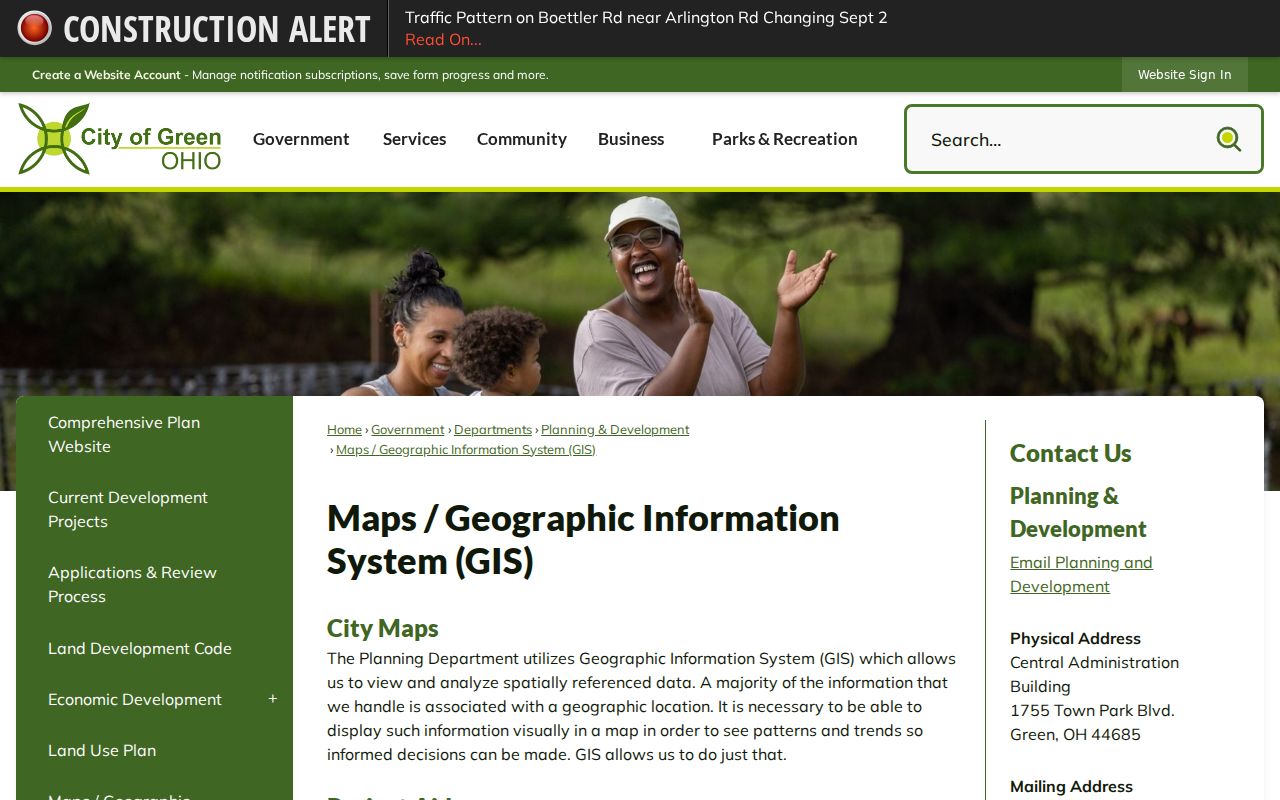
The Green map resource is the right first check when a street is listed with a different postal city or when the road has a newer segment.
Note: A Green ZIP label is useful for delivery, but the street number, parcel, and jurisdiction layers decide which local record trail applies.
Search Green Street Parcels
Summit County Fiscal Office Property Tax Information is the primary current Green address entry point. Select a tax year before searching. The address mode uses the compact form 123 main. Do not add a direction such as S or South, and do not add a suffix such as St or Ave. If the Green road is not found, try the documented parcel, route, owner, or image-parcel path rather than inventing a different address format.
| Property Tax field | Entry type | Query role | Documented Green use |
|---|---|---|---|
| Tax Year / current-owner selection | Selection | Choose before a query | Sets the current tax-year context. |
| Parcel | Text | Search mode | Seven digits, such as 0100001. |
| Route | Text | Search mode | Alphanumeric route, such as 080071B06004000. |
| Address | Text | Search mode | 123 main, with direction and suffix omitted. |
| Owner | Text | Search mode | Lastname%Firstname%, such as Smith%John%. |
| Image Parcel | Text | Alternate mode | Seven-digit parcel image search. |
A Green property result can identify a parcel ID, owner field, situs address, appraisal or assessment data, sales-related fields, and separately maintained mailing data. Summit also publishes CAMA downloads for owner, mailing, sale, permit, legal, assessment, dwelling, claim, and ZIP data. That breadth does not make the Green property screen a people list. The tax mailing field indicates where correspondence is sent and can differ from the Green situs.
Map Green Streets With GIS
After a Green address is normalized, the Summit County GIS Parcel Viewer can place it on a street segment. The documented controls include pan, zoom, home or reset, layers, parcel boundaries, parcel labels, and road labels. Official materials also show jurisdiction, floodplain, water, wetland, soil, and riparian context layers. Those layers help distinguish the Green parcel line from the postal boundary, but they do not certify ownership or replace a legal survey.
Use the Summit County GIS Parcel Viewer to locate the target, then pan along the Green street and note each visible parcel ID that matters to the question. Run those IDs one at a time through Property Tax Information. This is more reliable than treating a map label as a complete street directory or treating adjoining geometry as a title finding.
Green was the first municipality to enter a data-sharing agreement with Summit County GIS. The division of roles is useful: City maps give Green road, subdivision, and zoning context, while the County viewer gives Green parcel geometry and nearby-parcel context.
Trace Green Street Deeds
The Recording Division is the Green ownership-history leg. Summit records begin in 1840. Current Recorded Documents web search and viewing begin in 1988, while the Index Book Archive Viewer, known as IBAV, covers 1840 through 1988. Start with the Green parcel page's legal description and owner clue. Locate the present acquisition deed, record its date, grantor, grantee, reception or book-and-page placement, and legal description. Then search the seller as a grantee in the seller's earlier acquisition record.
The Summit Fiscal Office Recorded Documents route describes the Green recorder function and its document resources. At the 1988 cutoff, use IBAV, the fourth-floor public computers in the Recording Division customer-service area, or the counter. A mailed basic deed copy is listed as $4, plus $1 for certification, with a stated turnaround of three to five working days. Recording fees are different from copy fees.
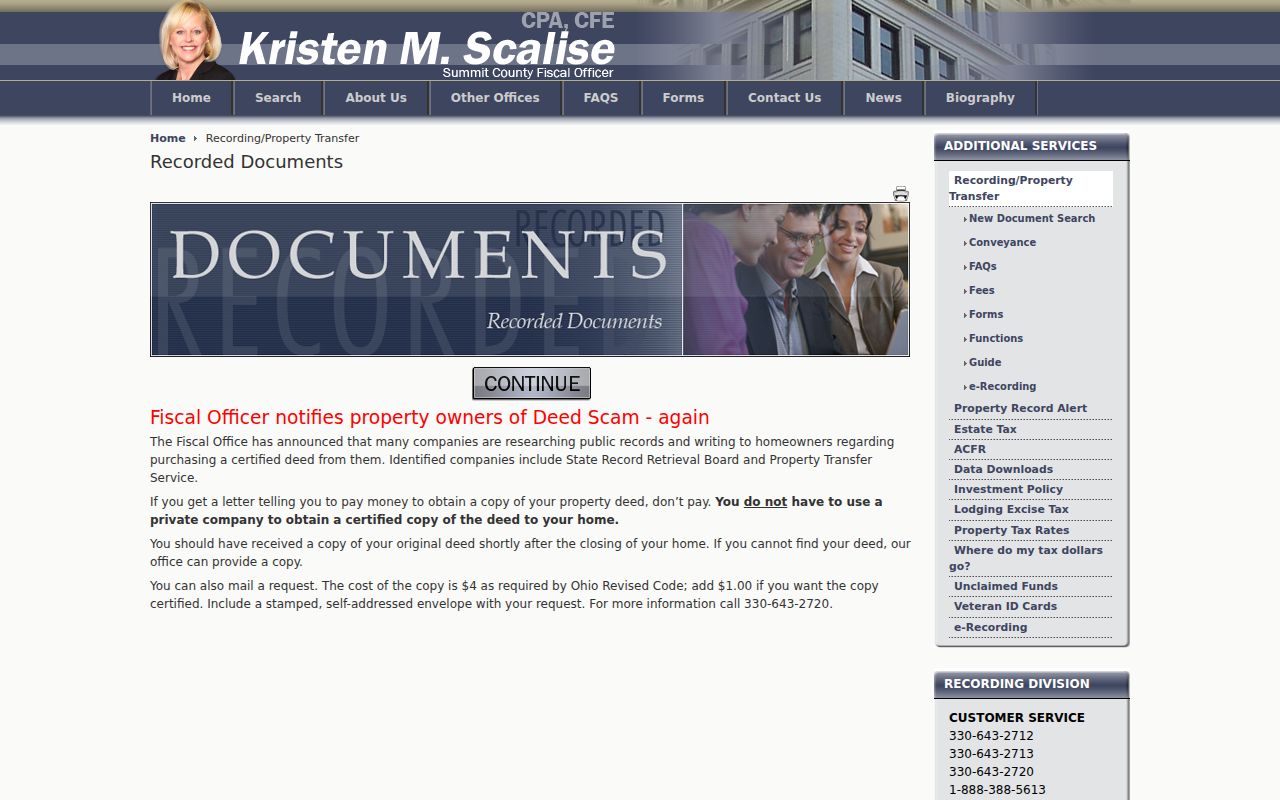
Recorded instruments can support a Green ownership chronology when party roles and the legal description remain consistent, but the Green Recorder route does not provide a guaranteed title search.
Compare Green Street Record Sets
A Green street directory result becomes stronger when each source is used for the fact it actually keeps. The City Street Index can normalize a road. The tax roll can provide a parcel and owner field. GIS can show mapped parcels. The recorder can document a party and legal-description chain. The Green permit route and election tools add bounded evidence, while library directories are historical leads rather than current proof.
| Address-keyed source | How Green is searched | What it supports | Important limit |
|---|---|---|---|
| City Street Index and ZIP information | Road name and postal locality | Normalizing the Green location | Not a property or person directory. |
| Summit Property Tax Information | 123 main, owner, parcel, or route | Owner field, parcel, situs and mailing distinction | Live data, not a household roster. |
| Summit GIS Parcel Viewer | Map, select, pan, and layers | Parcel adjacency and street segment | Geometry is not a title search. |
| Recorder and IBAV | Legal description and parties | Deeds, plats, and past owners | The street address may not be an index key. |
| Green Zoning and County Building | Address, date, and defined request | Permit, project, and code trail if retained | No public City permit lookup was found. |
| Summit BOE Street Report | Official Street Report Generation | Lawful voter-report route | Confidential records are excluded. |
| Haines and regional directories | Street or address section | Historic occupant or business lead | Coverage varies by volume and shelf date. |
Use the shared parcel or legal description to connect Green tax and recording material. Use a Green street name to find the mapped segment. Do not merge those different Green keys into a claim that every record describes the same current household.
Request Green Address Files
Green Zoning and the City Law public-records route provide the fallback when a Green address question concerns permits, inspections, zoning, code material, or a retained City document. No public searchable Green City permit database was located. Ask for a defined address, date range, and record type, such as zoning permits, inspection results, or final approvals. Green Zoning processes categories that include additions, demolition, accessory structures, fences, pools, signs, certificates of use, and right-of-way matters. County Building Standards is a separate construction and inspection channel.
The Green Zoning Division identifies its permit and code-enforcement role, while the Green permits and licenses page lists the City's application categories. A City public-record request need not be written and does not require the requester to reveal identity or intended use, though a precise request makes a retained Green file easier to locate.
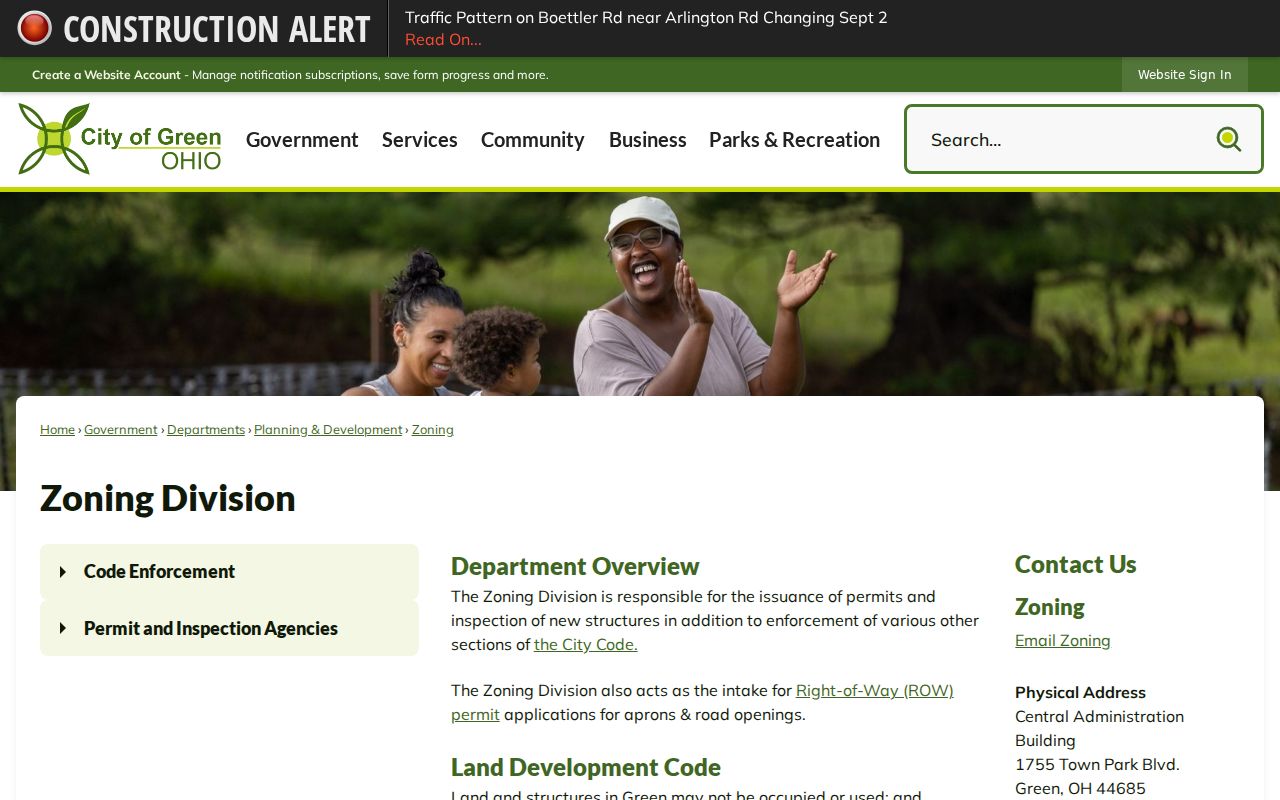
Green zoning materials help identify the proper custodian and land-use context, not a present occupant at the address.
The permits page also shows why a permit must be read narrowly. An application or approval can date a project or identify a filed party. It cannot establish who resides at a Green address now, and it does not prove a sale.
The Green permit categories are the source for this address-based trail.
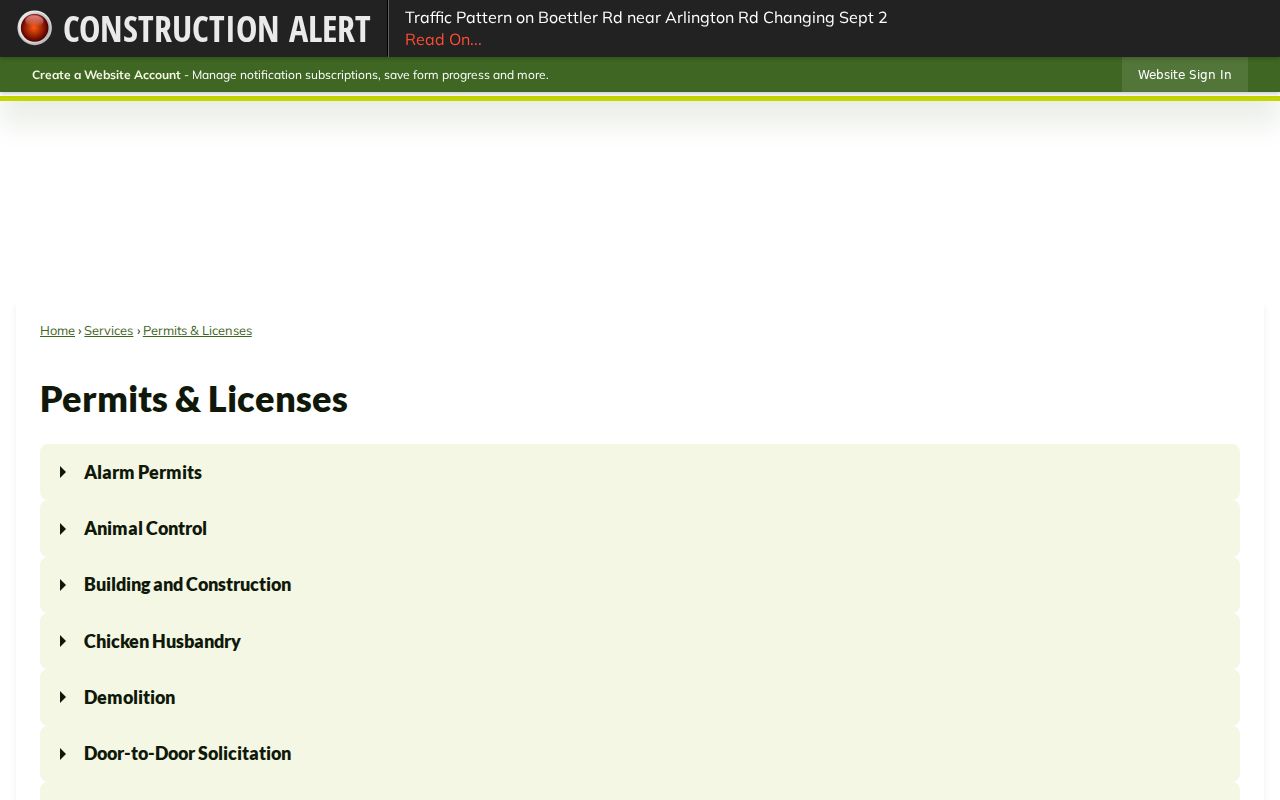
When a Green permit file is needed, the published contact and request paths are more reliable than looking for an unlisted City search form.
Use Green Street Reports Carefully
Summit Board of Elections advanced tools include Voter Lookup Search, Voter Report Generation, and Street Report Generation. That is an official Green street-based reporting route, but the available research does not document every current Green filter or output field. Use the Green tool itself, read its current disclaimer, and do not publish named results. Ohio treats registration records as public subject to statutory redactions and confidential-voter rules.
Ohio law excludes Social Security numbers, driver or state ID numbers, telephone numbers, email addresses, confidential voter records, protected public-service-worker addresses, citizenship proof, and other protected material. The public website may display limited registration data when the record is not confidential. Voting history is an election date, primary ballot party where applicable, and ballot type. It is not a record of ballot choices.
For a broader official record route, daily county voter snapshots can be retrieved through Ohio's voter-data service by selecting Summit County and a narrow date range. Summit BOE also accepts public-record requests. Its stated policy provides free inspection, $0.10 per paper page, $1 for a CD, email delivery free, and postage or delivery at cost.
Note: A missing Green voter lookup is not proof that someone never lived at the address, because records can be cancelled, confidential, or otherwise unavailable.
Read Historic Green Street Listings
For an older Green street directory trail, Akron-Summit County Public Library Special Collections is the local Green shelf to consult. Digitized regional city directories can include street sections where the Green or hamlet address was covered. Later Haines Akron City and Suburban Criss-Cross directories are held in Special Collections, but the library does not publish an exact year run for that shelf. Contact or visit the research room rather than assigning an unsupported date range.
The Kepler-Coss Collection adds clearly identified Green street-directory files for 1983–84 and 1987–88. It also has a 1919 resident list for Green and four nearby townships, township records beginning in 1811, tax maps, and local-history files. Historic listings may use Aultman, Comet, East Liberty, Greensburg, Myersville, or another postal form. Keep that original wording in the research notes. The City of Green label was not used for every earlier record.
For directory volumes and how their address sections relate to regional holdings, use the Green City Directories collection page. It carries the broader Green shelf and collection context without replacing the modern Green by-street record chain.
Define Green Street Record Terms
Several address terms appear in the Green parcel and deed trail. Keeping them separate prevents a mailing line or postal name from being mistaken for the physical parcel. The definitions below use the distinctions documented by Summit Fiscal Office and Green's dual-address geography.
- Parcel
- A county land unit with an identifying number used in Green tax and mapped-parcel records.
- Situs address
- The physical land location used to locate a Green parcel. It is different from the tax-mailing address.
- Plat
- A recorded subdivision or land map referenced in a legal description and useful for tying older Green lots to recorded documents.
- Criss-cross directory
- An address-arranged directory that can offer a historical occupant or business lead for a Green street where the volume covers it.
- Postal locality
- The delivery city name attached to a ZIP, which may differ from the Green municipal jurisdiction.
Legal description and parcel ID are the durable Green continuity clues when an address, ZIP, or postal locality changes. A Green tax search begins with situs or parcel. A Green deed chain follows legal description and party details in the Green record trail.
Respect Green Street Directory Limits
A Green street directory cannot reveal every person associated with an address. Parcels identify property facts and an owner field, not all occupants. Mailing data is maintained for tax correspondence. City permit material is a retained-record question, not a list of residents. Utilities, motor-vehicle personal information, and protected voter records have their own legal restrictions. The absence of a result should not be turned into a conclusion about a person's Green residence.
Ohio Safe at Home participants may have confidential voter records, and protected public-service-worker addresses can receive online redaction. The Ohio Safe at Home program explains the address-confidentiality route. Green address and street records are best used for personal, lawful research, family history, estate questions, property curiosity, and civic understanding.
Lawful use. Do not use Green address records to stalk, harass, intimidate, or harm anyone. Honor confidential and redacted records, and verify an important fact with the Green or Summit custodian that maintains it.