
Green Previous Residents by Era
One Green address can have a long but uneven record trail. Summit County keeps a near-continuous deed and index spine, while household evidence changes with the period. The current address is only the starting label. Save its parcel ID, legal description, subdivision or lot, current owner field, and any postal-place variation before moving backward. That small record set makes it much easier to decide which historical source can answer the next question.
| Source | Years It Covers | Where Held | What It Shows |
|---|---|---|---|
| Summit Recorded Documents | 1988-present | Fiscal Office web search | Current recorded instruments, parties, dates, and legal-description leads. |
| Recorder IBAV | 1840-1988 | Fiscal Office web/counter route | Index-book bridge for earlier deed-chain work. |
| Green Historical Society township records | 1811-1863 | Society digital archive | Early township and local administrative context. |
| Digitized regional directories | 1859-1969 listed run | ASCPL and Internet Archive | Names and street sections where the area is covered. |
| Green street-directory files | 1983-84; 1987-88 | Kepler-Coss Collection at ASCPL | Documented Green address-directory artifacts. |
| Federal census | Public through 1950 | National Archives and genealogy access | A household snapshot to pair cautiously with a directory year. |
Use the present-day document route for a recent ownership question, then shift to IBAV at the electronic cutoff. For an earlier Green household, a regional directory or township record may be more useful than an address search. The table does not make every source a proof of residency. It shows where each part of the trail belongs.
The Summit Fiscal Office recorder FAQ is shown below.
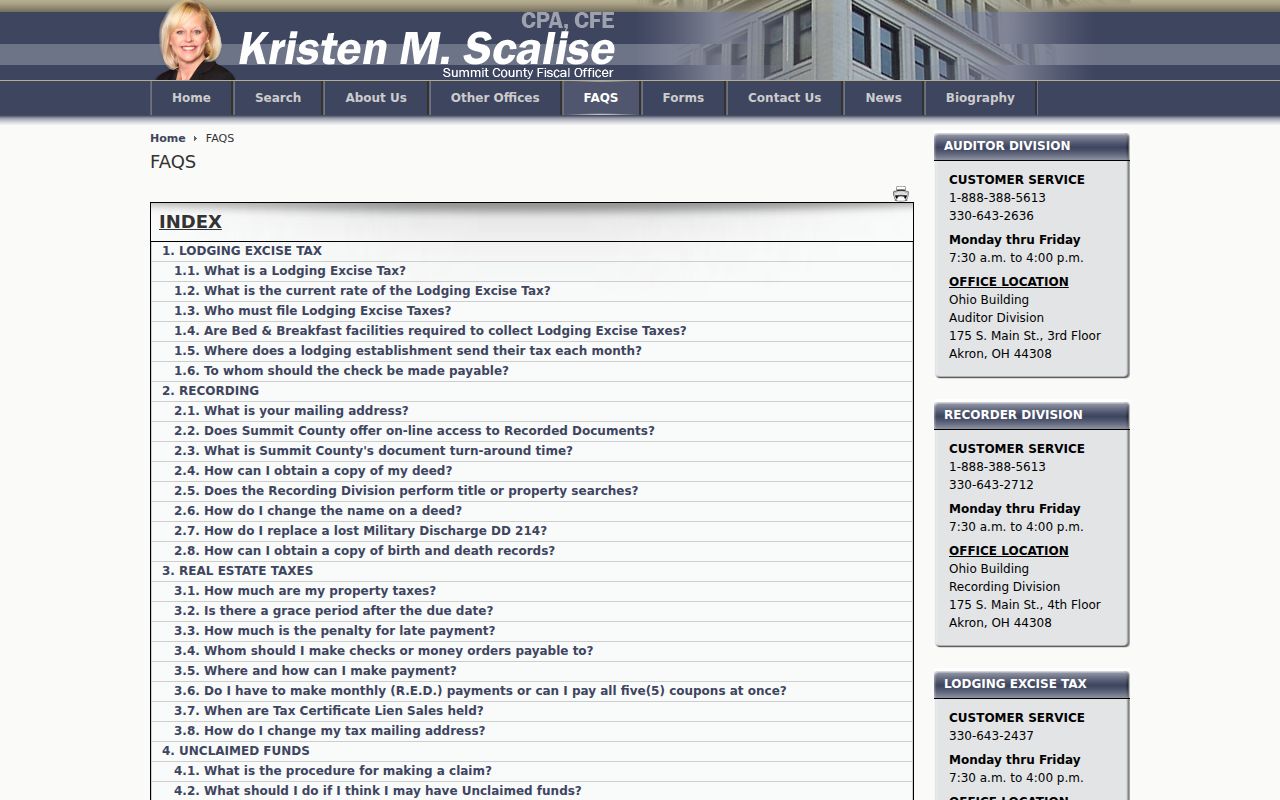
Its coverage split is the key handoff for a Green house history: web records begin in 1988, while the Index Book Archive Viewer reaches back to 1840.
Green Address Clues Before Names
The Summit Property Tax Information screen is the modern entry point. Its address format is number plus street, such as 123 main, without a direction or suffix, after choosing a tax year. Parcel, route, owner, and image-parcel routes are also available. The current owner and mailing fields are useful leads, but they answer different questions. A situs address identifies the land. A mailing address is where tax correspondence goes. Neither field is a complete household list.
For past residents, the durable handoff is the parcel ID and legal description. A legal description identifies land through a lot, subdivision, plat, or other recorded description. It can stay useful when a street number, postal place name, or informal road label changes. Preserve the current dual postal naming as well. Green uses several postal combinations, so a city label on an older document needs checking against the parcel rather than being silently modernized.
The Fiscal Office's Property Record Alert information is pictured here.
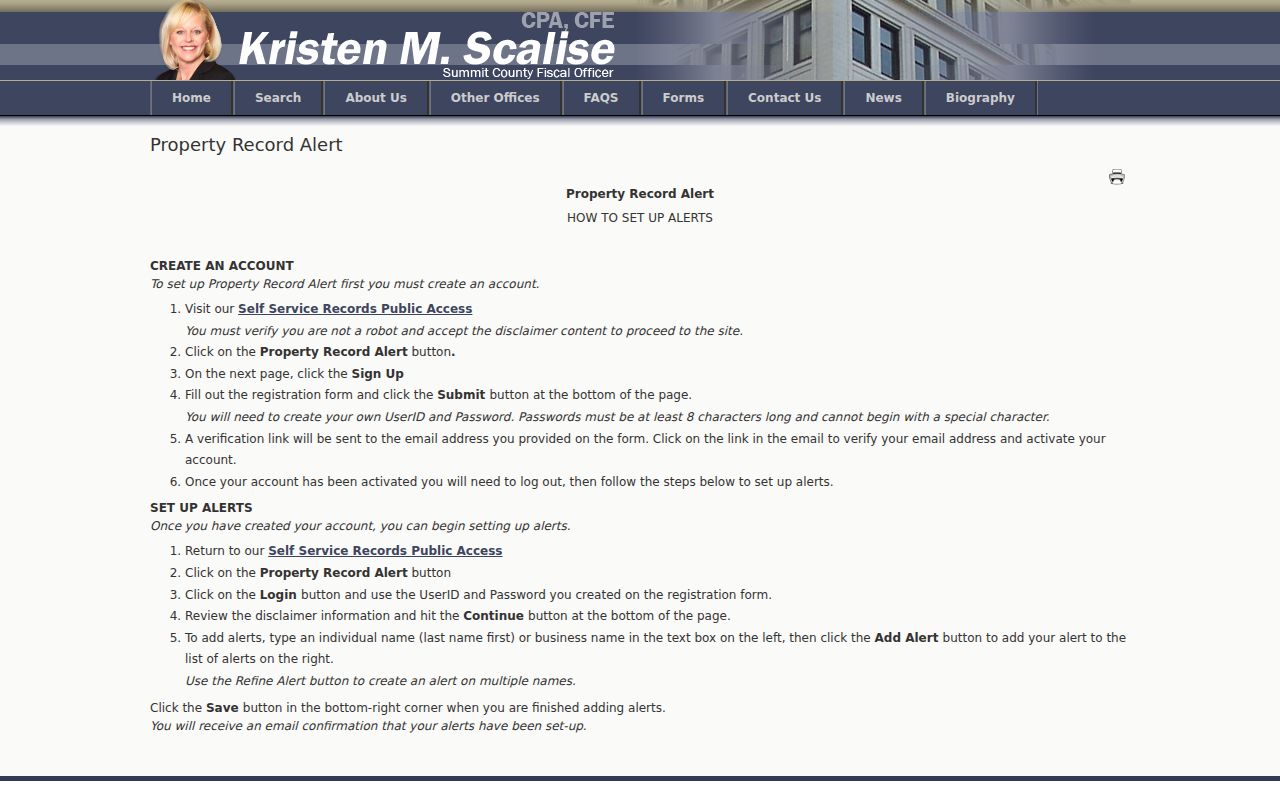
The alert service concerns new recordings under a name or business name. It can prompt a timely check with the Recording Division, but it does not replace reading the actual recorded instrument in a Green address trail.
Note: Keep the parcel, legal description, and postal-place wording in a dated research log, because each may lead to a different earlier record.
Green Previous Residents and Deed Chains
Owners are not always the people who lived at a property, but deeds supply the ownership backbone for previous-residents work. Summit's Recording Division holds county records from 1840. Begin with the current owner and legal description from the parcel record, then locate that owner's acquisition deed in Recorded Documents. Capture the recording date, document or reception reference, grantor, grantee, and legal description before following the next link.
- Search the current Green parcel and record its parcel ID, legal description, and owner field.
- Find the present owner's acquisition document in Summit Recorded Documents when the record is within the web era.
- Read the deed's grantor, grantee, recording reference, and land description rather than relying on the street address alone.
- Search the seller from the newer deed as a grantee to locate that person's earlier acquisition record.
- Repeat through the party names and consistent legal description, then move into IBAV, public computers, or the counter for pre-1988 links.
- Grantor
- The party transferring an interest in the recorded instrument.
- Grantee
- The party receiving that interest. In a backward search, the seller from a newer deed is often the earlier grantee to search.
- Chain of title
- The sequence of recorded transfers or interests that connects one ownership document to an earlier one.
- Legal description
- The recorded land identifier, such as a lot or subdivision description, that is usually more stable than an old street address.
A recorded deed may post after the transaction, and a person can leave without transferring title. Annotate those differences. The Recording Division does not provide a guaranteed title search, so a document trail is research evidence, not legal title advice.
Green Recorder Research Past 1988
The practical Green cutoff is 1988, not the beginning of county records. The current web environment handles documents from 1988 forward. Earlier links belong in IBAV, which covers 1840-1988, with public computers in the Recording Division customer-service area and counter or mail channels when needed. This is a useful insider step: do not stop a deed chain just because a web search reaches its date boundary.
Summit's preservation history supports that handoff. The County began preserving Recorder records in 1840, and the Fiscal Office now combines recording and appraisal functions that once sat in separate offices. The researched Recorder FAQ states a mailed basic deed copy is $4, plus $1 for certification, with a stamped self-addressed envelope. It also lists a three-to-five-working-day turnaround. Those copy details apply to the stated route, not to every historical request or legal question.
Note: A document index can locate a record, while the image or counter copy is where party roles and land language should be checked.
Green Previous Residents and Old Place Names
Older Green records may be cataloged under Green Township or one of the historic settlement names: Aultman, Comet, East Liberty, Greensburg, or Myersville. Green began as a township in 1809, became a village effective January 1, 1991, and was declared a city on April 5, 1992. Farm-to-subdivision conversion accelerated in the 1950s. Those changes explain why a census, directory, tax map, or obituary can use a different geographic label than a current parcel record.
The Green Historical Society archive holds scanned township records from 1811-1863 and historical maps. The Kepler-Coss material at Akron-Summit County Public Library adds Green tax maps for 1859 and 1870, along with an 1874 Summit County historical atlas in its finding aid. Use an old map label as a clue, then test it against parcel, legal-description, and recorded-document evidence.
Sanborn fire-insurance coverage for Green was not verified in the research. The better local fallback is the City Street Index, subdivision map, historic tax maps, or a catalog question to Special Collections or Ohio History Connection. No documented Green street-renumbering project was located, so township, hamlet, incorporation, and postal-place shifts are the real continuity checks.
Green Past Residents in Directories
A deed chain tracks property interests. To learn who lived here before, branch at each era to directory and census evidence. The digitized Akron/Summit directory collection lists regional volumes from 1859-1969, though an individual rural Green road may not appear in every volume. Later Haines Akron City and Suburban Criss-Cross directories at ASCPL Special Collections provide the address-to-occupant route, but the library does not publish precise shelf years. The collections themselves are described in the Green city directory collections.
- Search a surname and spelling variants in the digitized directory, then inspect the complete page and its abbreviation key.
- Record the directory year, page, listing type, printed address or post office, and any spouse or other entry field actually shown.
- For a later address search, ask ASCPL Special Collections for the Haines criss-cross volumes rather than assuming a date run.
- Pair a directory year with the nearest released federal census and compare their different reference dates.
- Use the local 1880 and 1920 Green census folders as entry points, then inspect the underlying census source.
Federal schedules are public through 1950. A directory entry is a time-specific listing, not proof of ownership or a complete family group. Comparing several years can expose a move, a new household notation, or a changed postal label that deserves confirmation elsewhere.
The Summit Probate marriage-record route is shown below.
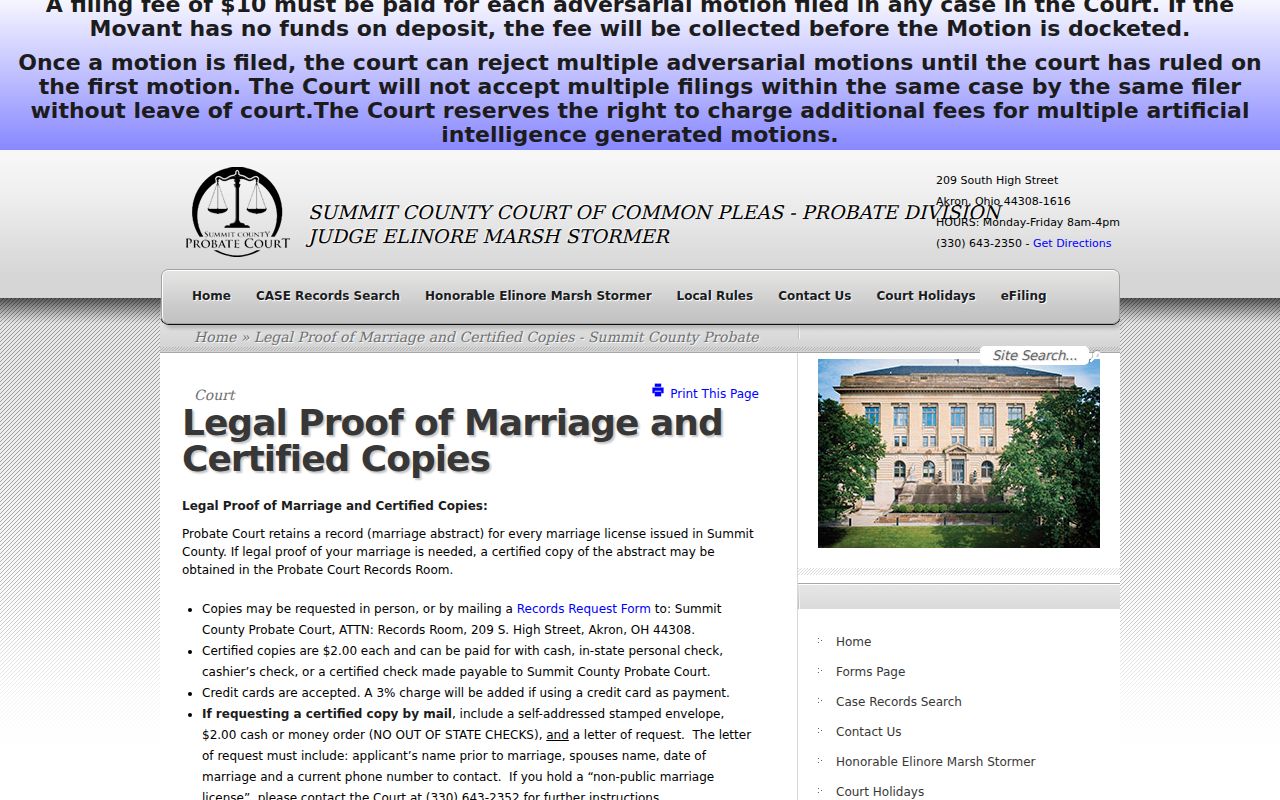
Family-event records can help distinguish similar names in a directory trail, but they should be compared with the address and document sequence rather than treated as property transfers.
Green Previous Residents in Local Files
The Kepler-Coss Collection offers unusually focused material for Green. It lists two Green Township street-directory files, 1983-84 and 1987-88, plus a 1919 resident list covering Coventry, Franklin, Green, Norton, and Springfield townships. It also identifies a township book beginning in 1811, land and tax maps, Green houses, churches, cemeteries, newspapers, fair programs, and historic-residence images. Cite the collection as a finding aid and ask Special Collections about the relevant folder or volume.
These files can put an address into a community setting without turning a historic list into a modern people search. A Green Township label, a named hamlet, and a road or parcel clue are all worth recording. The detail supports a careful timeline, especially before current postal naming and suburban parcel layouts became familiar.
Green Address Trails Beyond Deeds
Some previous-residents questions end in a court or probate file, but those records are separate from the Recorder's ownership chain. Summit Probate holds estates, guardianships, and marriages from 1840. An obituary citation can identify family names and a likely death period; an estate or guardianship file can then help explain legal succession. Confirm the land result through the next recorded deed. A residence line in an obituary does not itself transfer real property.
The Barberton Municipal Court public-records information is pictured below.
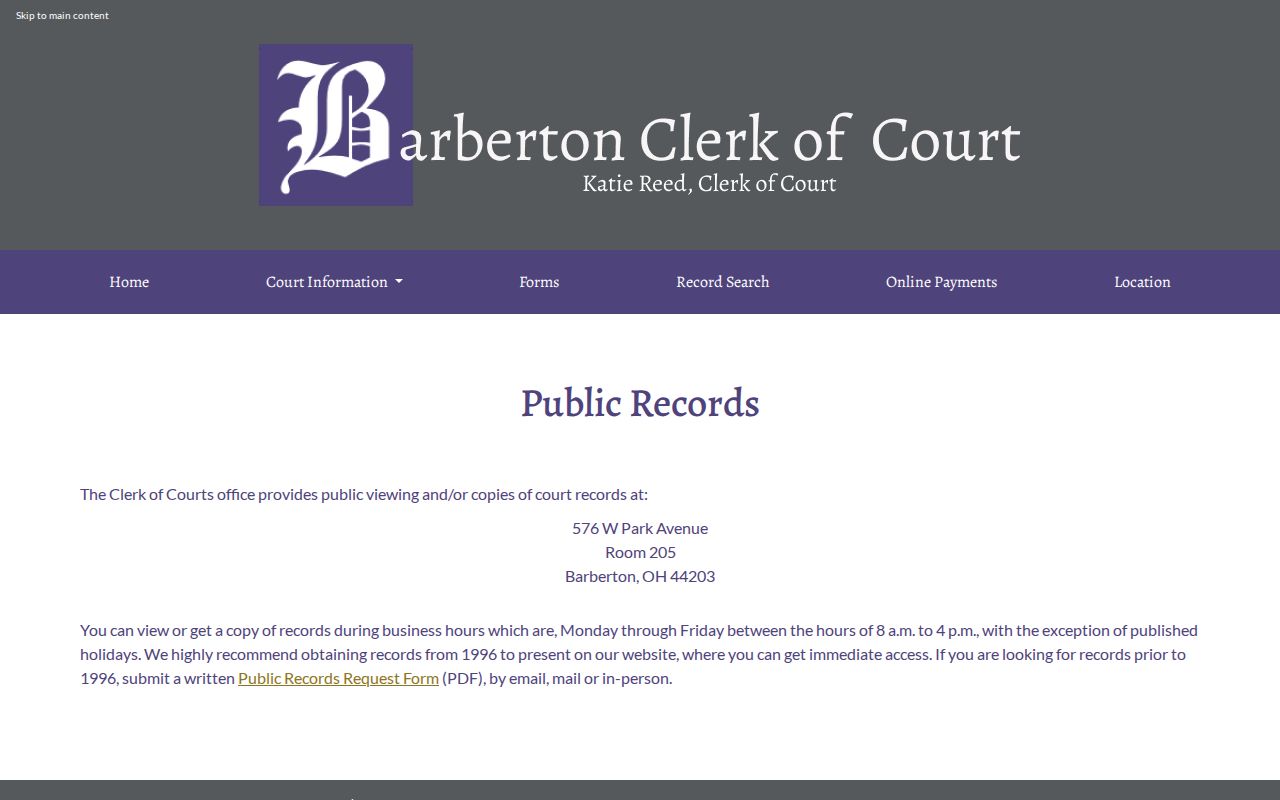
Barberton Municipal Court serves Green municipal matters, while Recorder and Probate files remain their own county record channels. Keep each record type with its proper custodian.
The Summit County Clerk public-records request route is shown here.
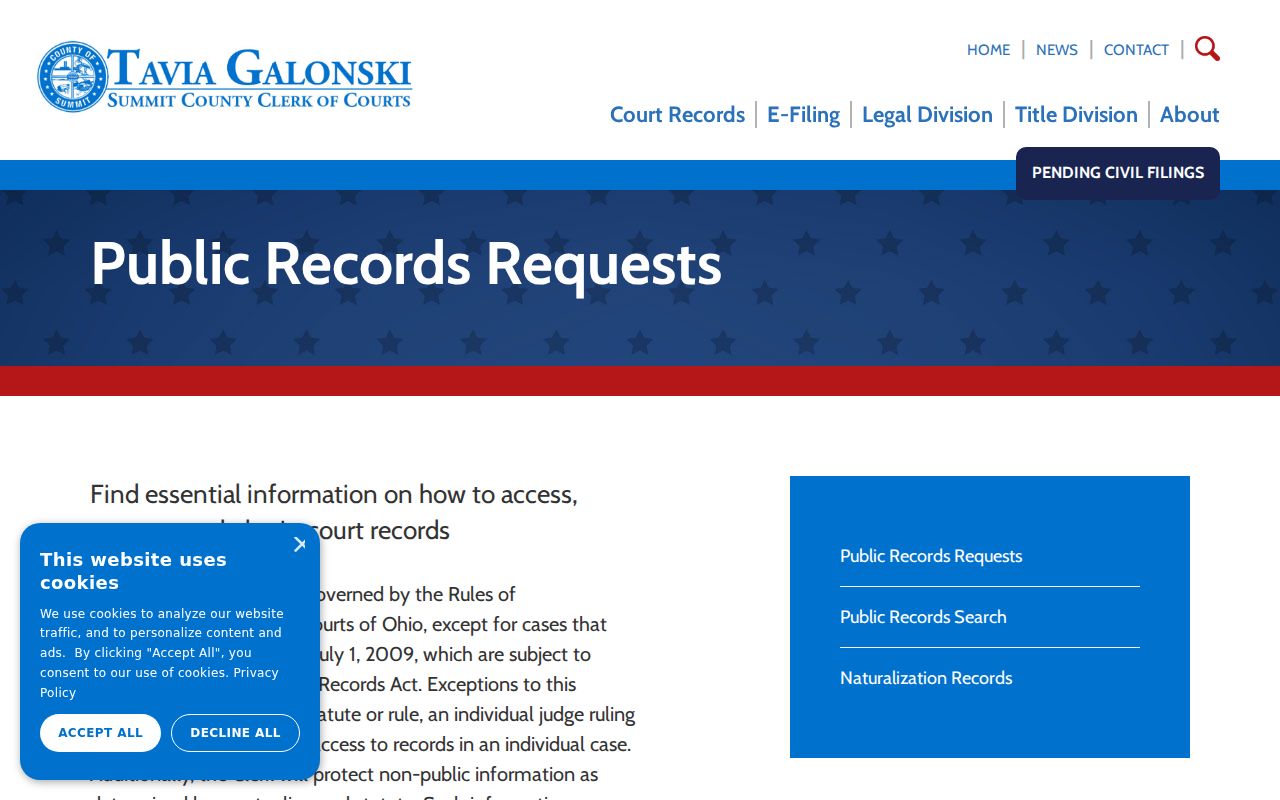
The Clerk route is useful when a known court file needs a request or File Room follow-up. It does not replace the Fiscal Office document index for a Green deed chain.
The PACER federal court record-access portal is also pictured below.
A separate court-access channel may supply a dated case reference, but it does not establish the ownership or household history of a Green parcel.
Limits on Green Previous Residents Research
Previous-residents research is strongest when it stays evidence-based. Property owner fields, tax mailing fields, permit files, directory listings, obituaries, and census records each describe a narrow moment or purpose. Green Zoning permit and code material can date work or identify a filing event, but no public online City permit index was located. Ask City Law or Zoning for a defined address, record type, and date range instead of assuming a missing search screen means no record exists.
Lawful use. Green house-history and family-history research should remain personal and respectful. Stop at public sources, honor Safe at Home and other redactions, and never use a record trail to watch, harass, or harm a living person.