
Finding Green Residents by Record
Green has no single government roll that identifies every person who lives in the city. The best route depends on the question. The Summit County Fiscal Office property record identifies a current owner and parcel. Ohio voter tools are useful for registration verification. Recorded documents establish parties to a land transaction, while library collections can place a household at an earlier address. None of those sources proves a complete household by itself. A mailing address on a tax record, for example, can differ from the property address.
Start with official material and keep the record type in view. A parcel is an identified piece of land. A deed index is a list of people or entities named in recorded instruments. A directory is a dated publication, not a current roster. That distinction prevents a Green resident search from turning one useful clue into an unsupported conclusion.
- Use the Fiscal Office property search when you have a name or street address, and record the parcel and situs address.
- Confirm a registration question through Ohio My Voter Information or Summit’s official voter-tool hub.
- Use the parcel’s legal description and the Recording Division index to follow an ownership document.
- For a past household, check the Akron-Summit County Public Library directory collection and its Green-specific Kepler-Coss files.
- When an existing City or county record is not online, request it from the agency that keeps it with a clear address, date range, and record description.
Green Resident Records Custodians
Most core Green resident records are county-held in Akron, not at City Hall. The City Law Department handles Green public-records requests and can route retained municipal material. The Summit County Fiscal Office combines the county’s appraisal, recording, and treasurer functions, though each division has a different job. Elections, court, vital, and library records have their own custodians. Use the office that created or maintains the record rather than a general mailbox when one is known.
Summit Recording Division
175 S. Main St., fourth floor
Akron, OH 44308
330-643-2712
Summit Fiscal Office Property Tax
County appraisal and tax records
Akron, OH
330-643-2710
Summit Board of Elections
Registration and public report tools
Summit County, Ohio
Use the official tool hub
City-held zoning, permit, inspection, and retained municipal records take a separate route through the Green Law Department’s public-records request page. A request need not be written or identify the requester under Ohio’s public-record rules, but a precise request helps staff locate an existing record.
Green Residents Through Parcel Search
The Fiscal Office’s Property Tax Information screen is a strong first stop for an address-based Green residents directory search. Choose the tax year before searching. The tool supports parcel, route, address, owner, and image-parcel modes. An address search is a parcel-location tool, not a title certificate or a list of everyone at that address. Its owner and mailing fields should be read with the same caution.
| Property-search field | How Summit documents it | Why it matters |
|---|---|---|
| Address | Enter a number and street, such as 123 main; omit direction and suffix. | Locates the situs-oriented parcel record. |
| Owner | Use Lastname%Firstname%, such as Smith%John%. | Finds current-owner records after tax-year selection. |
| Parcel | Seven-digit entry, such as 0100001. | Gives a stable key for later deed work. |
| Route / image parcel | Alternate documented search modes. | Useful when the normal address form does not resolve. |
See the Green street directory for the full address-to-parcel workflow. The fiscal record is live and can change, so confirm a consequential detail with the office.
A view of the official Summit property search shows the available lookup choices.
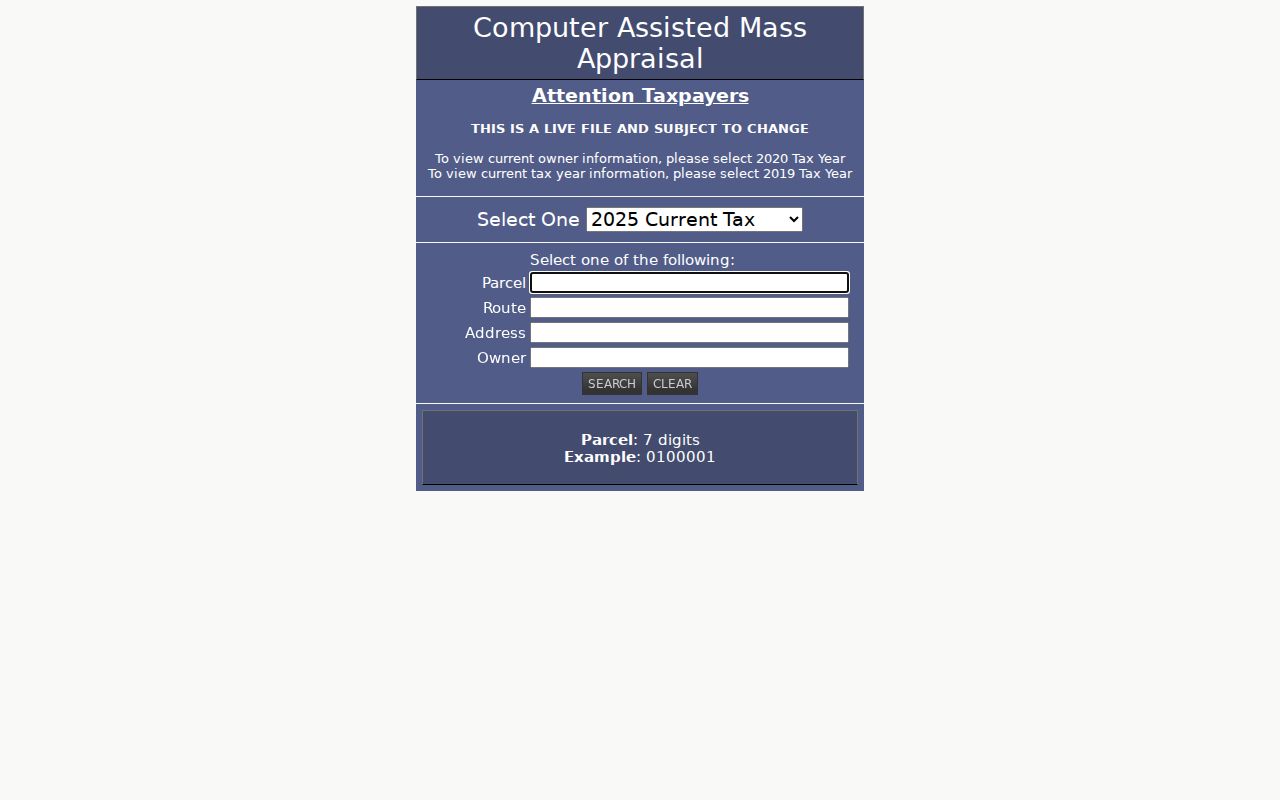
Those choices lead to a parcel record; they do not convert a tax mailing address into proof of current occupancy.
Green Postal Names Need Parcel Checks
Green’s six ZIP codes are a local records trap. A City address may properly carry Green, Akron, Uniontown, North Canton, or Clinton as its postal locality. The City explains that four Summit County and two Stark County postal codes cross Green. A ZIP label therefore does not settle city jurisdiction, land ownership, or which history label an older record uses.
Use USPS to check delivery format, then verify the street number and parcel through the City’s stated confirmation path and the county GIS layer. The City’s One Green, One ZIP explanation describes the continuing six-code issue. It is a geography check, not a people search.
Current Green Residents Directory Sources
Different current sources answer different questions about Green residents. Property records identify owners and parcels. Voter records are governed by Ohio registration law and exclusions. Recorded-document indexes identify transaction parties. Court records are event-specific. A person who does not own property, register to vote, or appear in a given record may still live in Green, so absence in one roll is not proof of absence from the city.
| Green source | What it can show | Custodian | Access route |
|---|---|---|---|
| Property Tax Information | Current owner, parcel, situs and tax/appraisal context | Summit Fiscal Office | Public web search and county data resources |
| Ohio and Summit voter tools | Registration verification and documented public reports | Secretary of State / Summit BOE | Official lookup and tool hub, subject to redactions |
| Recorded Documents | Parties to deeds, mortgages, plats and related instruments | Summit Recording Division | Web, IBAV, counter and mail-copy routes |
| Court indexes | Named court matters, not a residency roster | Barberton, Clerk and Probate | Separate court portals and request channels |
| Directory collections | Dated household and address leads | ASCPL Special Collections | Digitized volumes and research-room holdings |
A name needing two independent checks belongs in the Green resident search process, where court, voter, parcel, and historic sources can be kept separate.
Green Residents Directory Terms to Separate
Several record labels look alike but answer different questions. Keeping them apart is especially useful in Green because a property can have a Green street location, an Akron or Uniontown postal label, and a different tax mailing address. The Fiscal Office publishes live property material, while the Recording Division preserves instruments about land transactions. The library’s dated volumes describe what was printed in a particular year. Each source can strengthen a Green residents directory search when it is used for its stated purpose.
- Parcel
- A county identifier for a specific piece of land. It is the practical bridge from a street address to Fiscal Office and GIS records.
- Situs address
- The physical property location used to find a parcel. It is not automatically the owner’s tax mailing address.
- Recorded-document index
- An index to named parties and recorded instruments such as deeds, mortgages, plats, releases, and easements. It is not an occupancy list.
- Criss-cross directory
- An address-organized directory used to find dated occupant or business leads. Later Haines Akron City and Suburban volumes are held in ASCPL Special Collections.
Official records and privately assembled compilations also serve different roles. A custodian record gives a defined source, date, and access route, but may be narrow or redacted. A private compilation can be incomplete, stale, or unclear about where a claim originated. Confirm any meaningful Green resident detail at the office, portal, archive, or library that holds the underlying record.
| Source type | Best use | Important limit |
|---|---|---|
| Official custodian record | Verify the defined field or instrument it maintains. | May be limited by record type, date, or lawful redaction. |
| Historical directory or archive | Build a dated family, address, or township lead. | Coverage and printed details vary by volume and year. |
| Private compilation | Only a possible lead to check independently. | It does not replace a custodian’s current or certified record. |
Green Voter Records Have Limits
Ohio My Voter Information is the official statewide verification route. Summit also provides a local hub with voter lookup, report generation, and Street Report Generation. Registration forms and databases are public subject to R.C. 3503.13 redactions and confidential-voter rules. Use a name variant carefully and do not treat a non-result as an instruction to look for protected data.
Registration can corroborate a person-address connection when it is available, but it does not reveal ballot choices and is not a full Green residents directory. Protected records, redacted fields, and recent changes can alter what the public tool displays.
Personal, lawful research only. Green records can help with family history, reconnection with consent, estate questions, and civic verification, never watching, harassing, or harming another person.
Green Court Records Follow Jurisdiction
Choose a court by the type of matter, not merely by a Green address. Barberton Municipal Court handles Green traffic, criminal, small-claims, and limited civil matters, with web records recommended from 1996 forward and written-request alternatives for earlier records. Common Pleas and the Clerk handle other county matters; Probate separately handles estates, guardianships, marriages, and historic vital material. The same name may appear in none, one, or several systems.
The Common Pleas General Division name search accepts first name, middle initial, last name, or company information and offers All, Criminal, and Civil controls. It requires at least three letters of a first and last name unless using the company route. A case hit is a lead to the proper Clerk file, not a conclusion about identity.
The official Summit Clerk division chooser separates Domestic, Civil, Criminal, Court of Appeals, and Naturalization records.
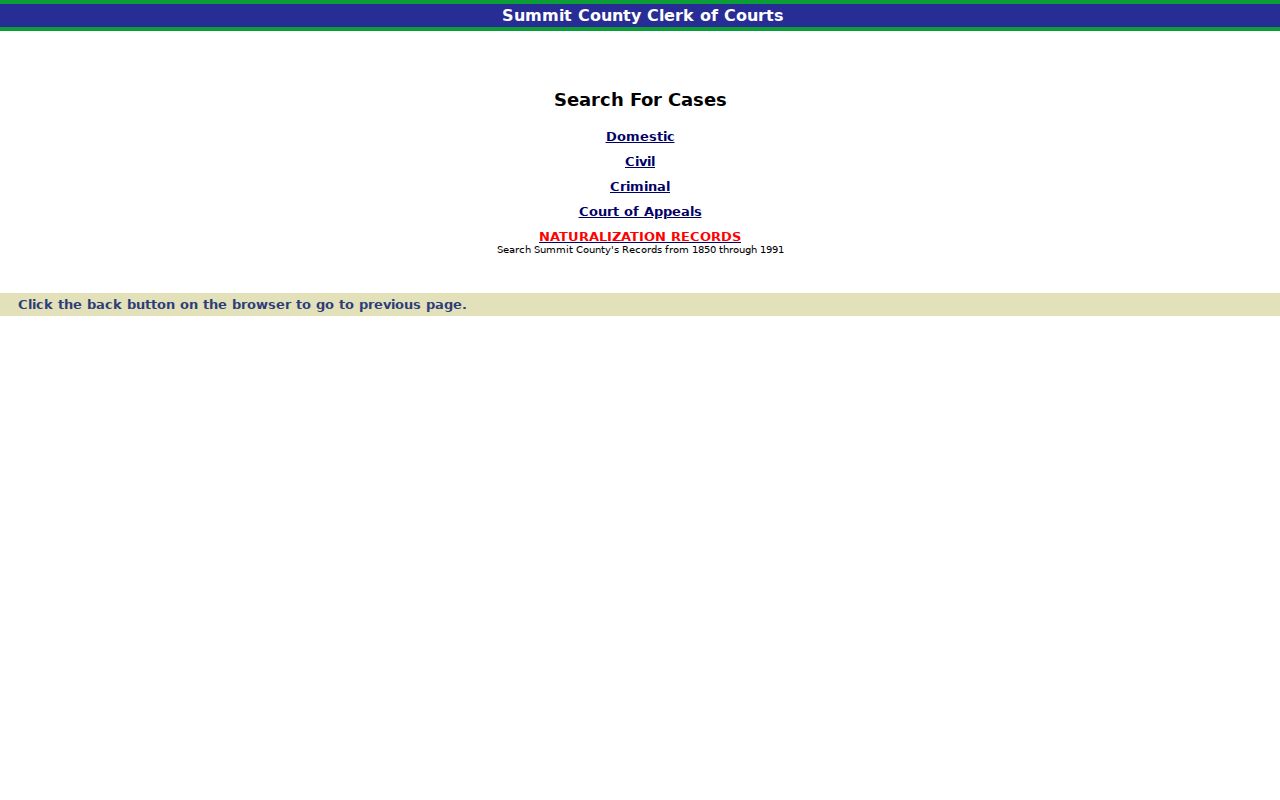
That division screen illustrates why a single court portal is not a complete county-wide name search.
Green Vital and Probate Trails
For a birth, death, marriage, or estate question, first decide whether you need certified proof, a historical index, or a family-history lead. Summit County Public Health issues certified births for all Ohio counties and deaths that occurred in Summit County. Ohio vital copies generally use a signed application and fee under R.C. 3705.23, with separate limits for medical and adoption-related portions. The research does not support a blanket Ohio age-closure rule.
Summit Probate holds estates, guardianships, and marriages from 1840, plus historic births and deaths from 1869 through 1908. The Probate Court can assist genealogists during normal hours; a marriage request for 1840–1980 can use both surnames and the year. A certified marriage abstract is listed at $2. Obituaries and historical indexes are useful leads, but the custodian supplies the certified record.
Green Records Beyond the Web
A web form is only one access channel. Summit Recording Division current documents are searchable and viewable online from 1988 forward, while its Index Book Archive Viewer reaches 1840–1988. Public computers are available in the Recording Division’s customer-service area. The City’s Law Department is the route for retained City records that have no searchable database, including a defined request for zoning permits or inspection material by address and date range.
For court material, the Clerk directs older files to its File Room and public-records procedure. For historical people-and-address evidence, ASCPL Special Collections provides digitized regional directories plus later shelves, Haines criss-cross volumes, phone books, newspapers, and archival files. The right fallback is the counter, request form, mail or phone route, or library research room, depending on the custodian.
An official Green public-records request page provides the City route for existing municipal records.
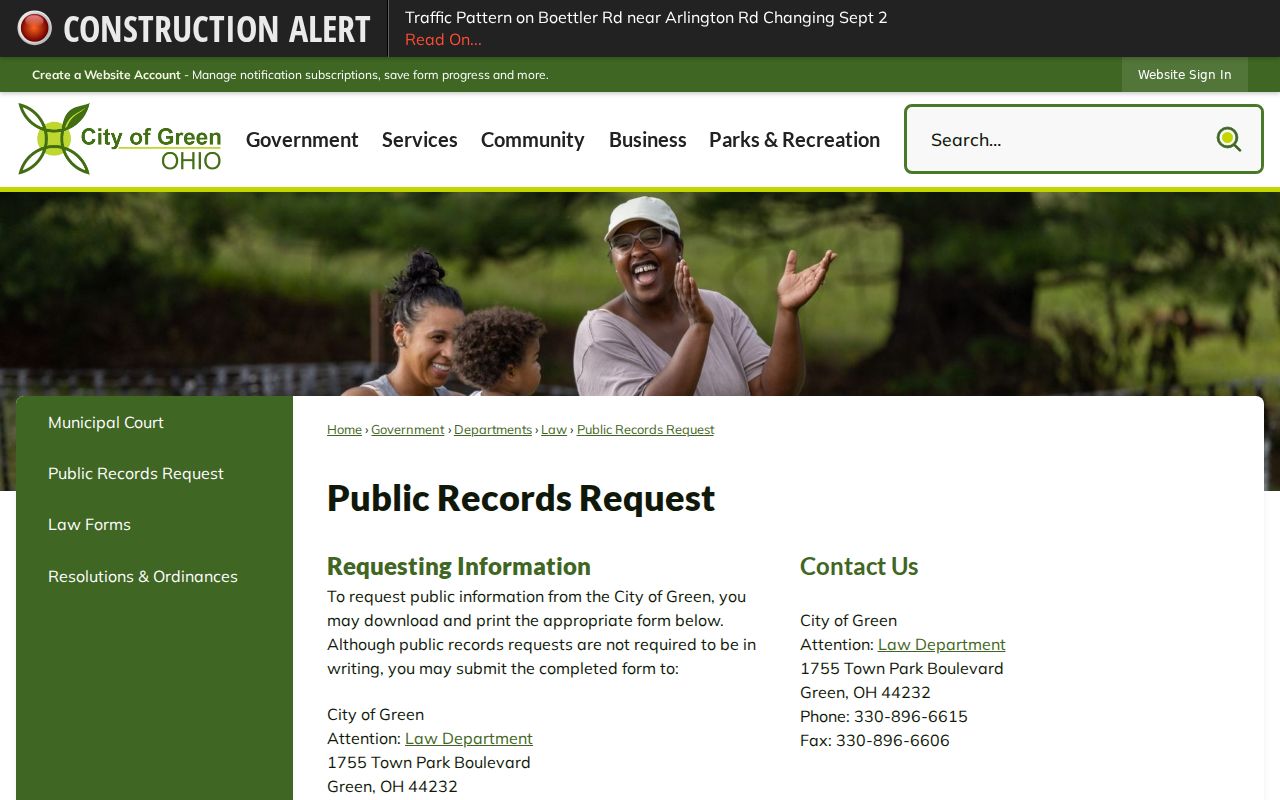
This City request channel is particularly important because no public name-searchable Green permit index was located.
Green Public Records Need Specific Requests
Ohio’s Public Records Act, R.C. 149.43, requires prompt inspection and copies within a reasonable time. Inspection is ordinarily free, while copying and delivery may be charged at actual cost. A custodian may not require a requester’s identity or purpose except for the statute’s limited explanatory inquiry. The practical Green approach is to describe the existing record, address or name, date range, and desired medium without asking the office to create a new resident list or conduct research.
The official Ohio Public Records Act text is the controlling statute. Send a request to the specific custodian, such as Recording, the Clerk, the Board of Elections, or Public Health, rather than assuming a general county request reaches an independent office.
The state’s published R.C. 149.43 page is the source for the request rule.
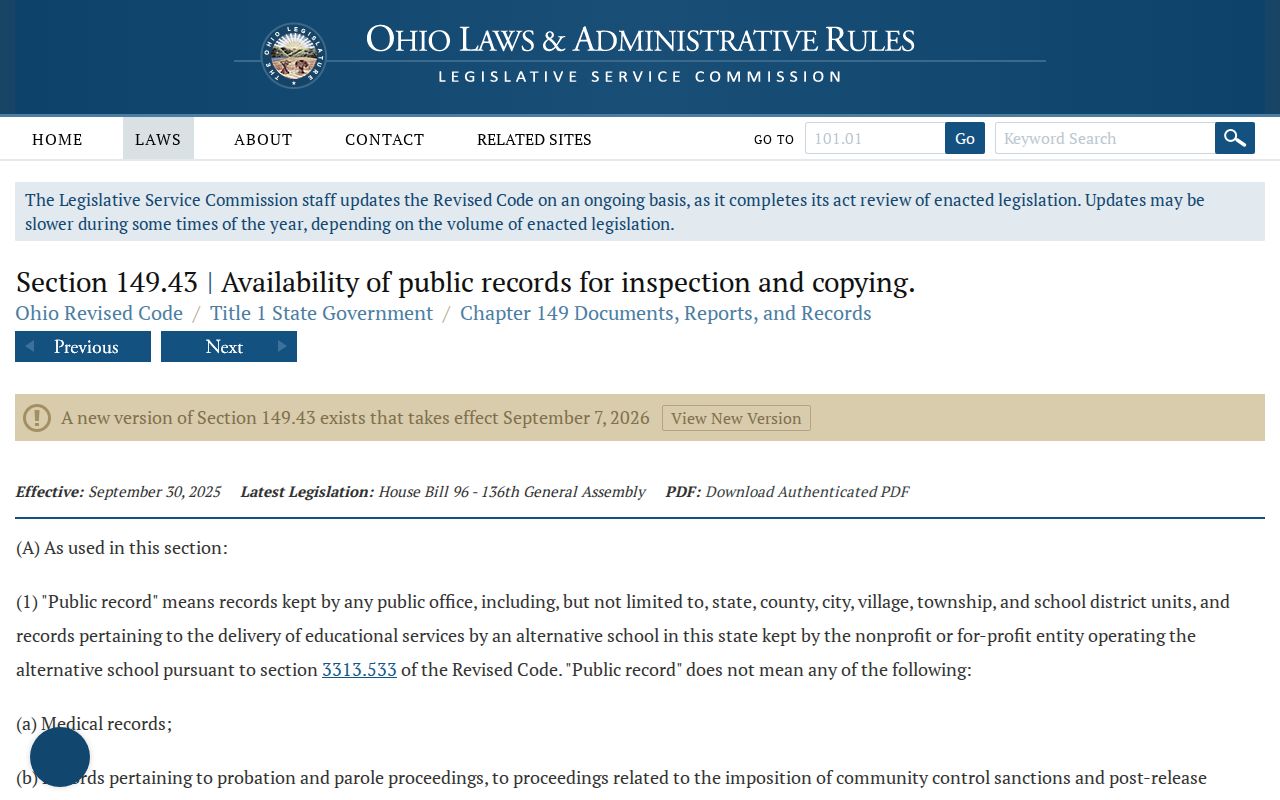
The statute supports access to existing public records, while still leaving protected and confidential information outside routine release.
Historical Green Residents and Township Names
Older Green residents may be indexed under Green Township or one of five historic settlement names: Aultman, Comet, East Liberty, Greensburg, and Myersville. Green began as a township in 1809, became a village in 1991, and was declared a city in 1992. Search those local labels as catalog terms, but do not substitute one name for another unless the source itself connects them.
The Akron-Summit County Public Library offers digitized regional directories and holds later Haines Akron City and Suburban Criss-Cross volumes in Special Collections. Its Kepler-Coss finding aid identifies a Green 1919 resident list, street directories for 1983–84 and 1987–88, township material beginning in 1811, tax maps, census folders, and historic-home material. The detailed collection methods belong on the Green city-directory-collections page.
Green Recorder Alerts and Official Domains
Summit’s free Property Record Alert began in May 2024 after increased deed-fraud concerns. It lets a person set an alert using an individual last-name-first or business name, but it is not a guarantee against fraud and does not establish title. For an unexpected recording, contact the Recording Division through its official domain and verify the actual document.
The state’s official Ohio offender search is another example of a narrow record tool: it reports current incarceration, supervision, or judicial-release data, not every criminal record or a Green resident roster.
An official screen from the Ohio offender search shows the limited state lookup interface.
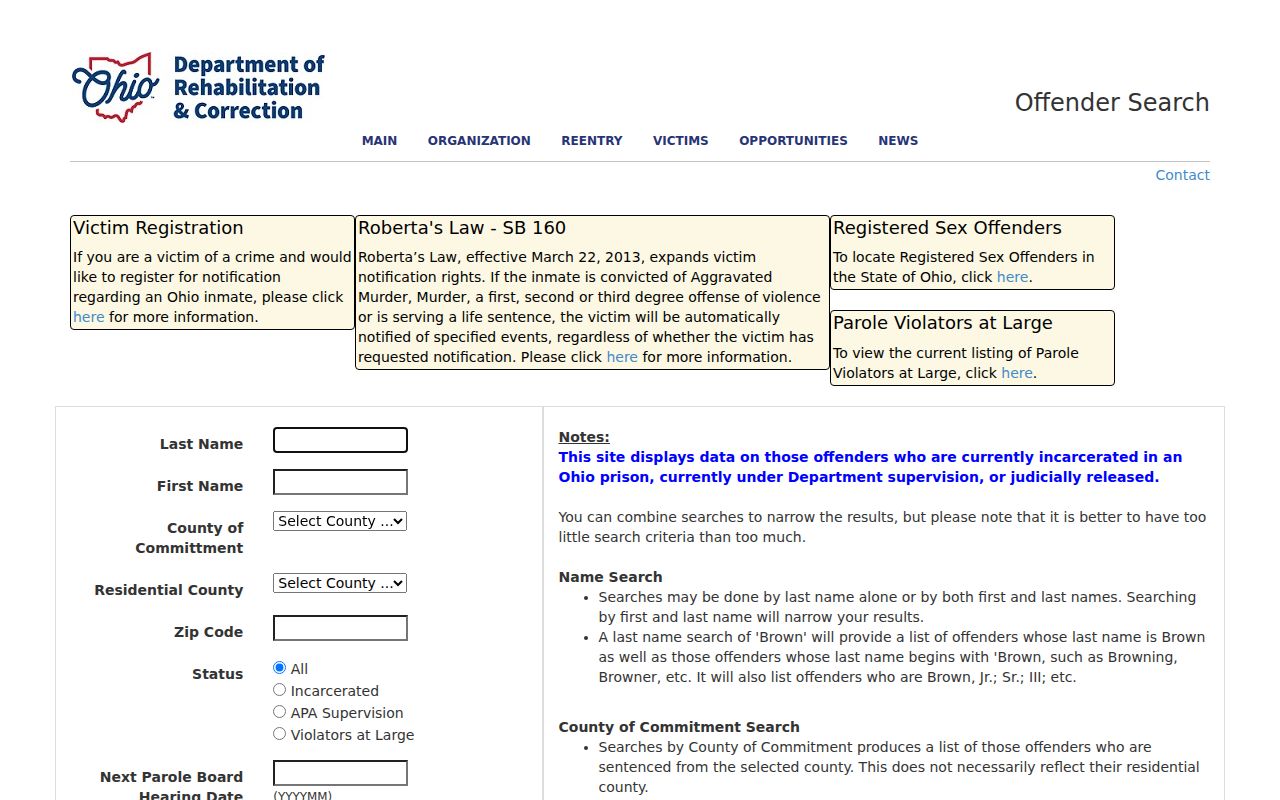
Use only the designated official source and read a result within the limits the agency states.
Professional credentials can likewise confirm a public credential, not a home address. The Ohio eLicense verification system asks users to choose the appropriate board or credential route.
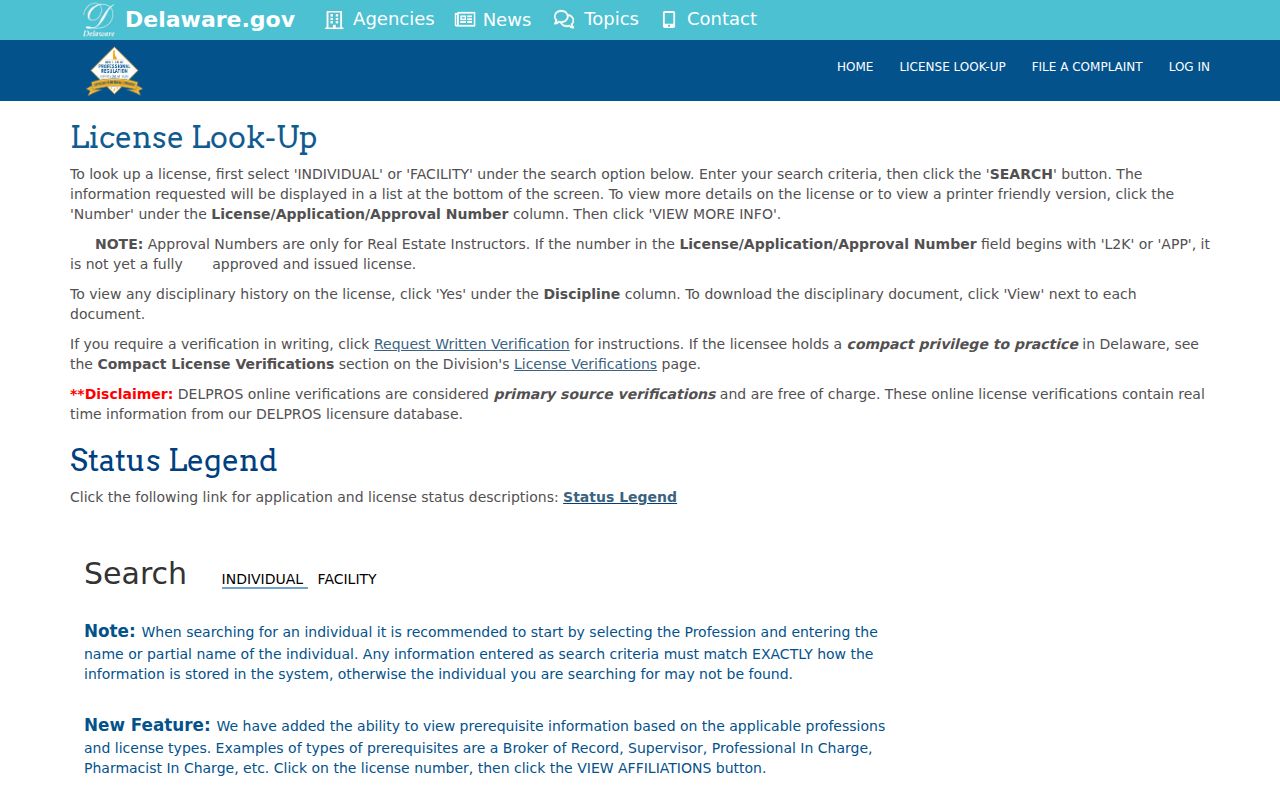
A license result may show status and board details, but it should not be used as residence evidence.